


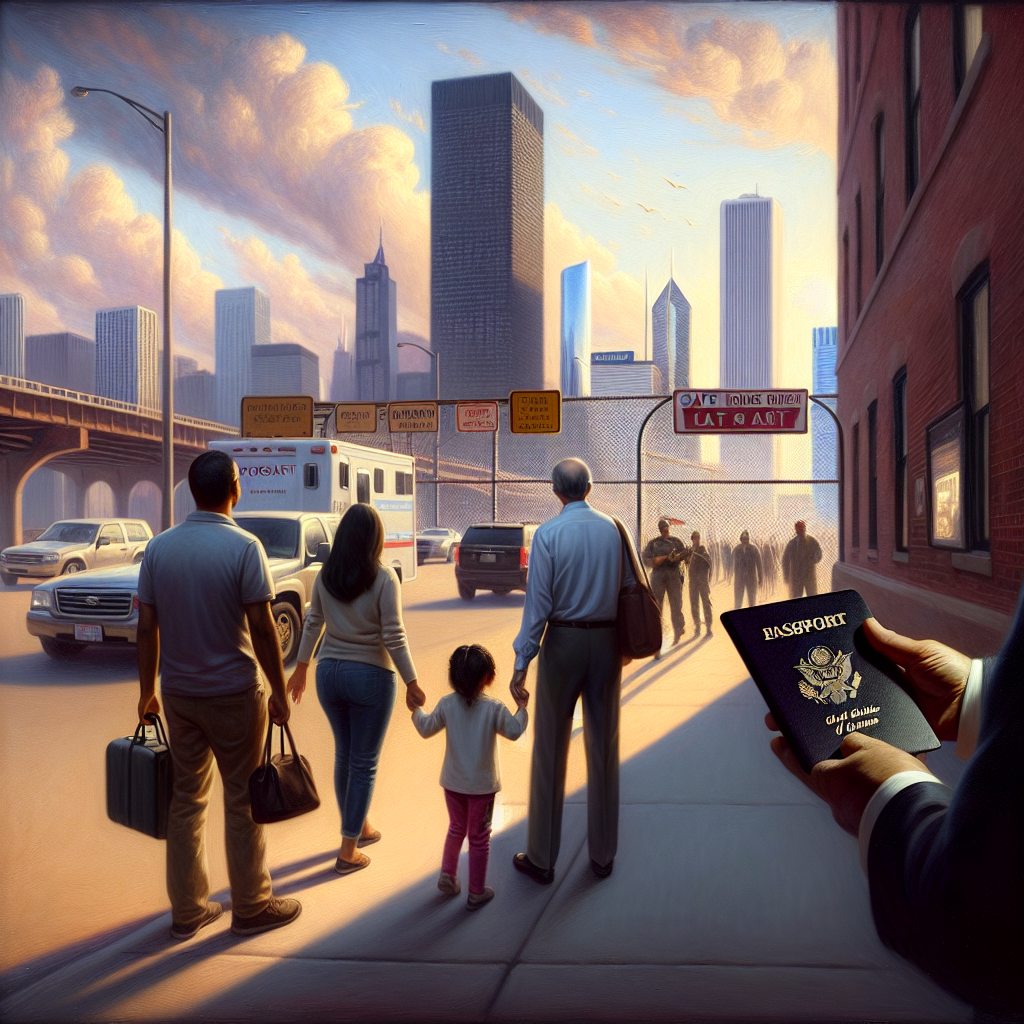
The provided <div> contains an extensive analysis of the Trump administration’s immigration policy and propaganda strategies in Chicago. Here’s a breakdown of its content and meaning:
Overview of Content:
-
Context of Immigration Enforcement:
- The passage describes the aggressive immigration enforcement campaign initiated by President Trump, suggesting it creates a negative narrative about Chicago, depicting it as a lawless city.
-
Propaganda Mechanisms:
- The administration uses dramatic videos and social media to sway public opinion. This includes military imagery, hyperbolic descriptions of events, and the portrayal of agents as heroic figures.
-
Contrasting Narratives:
- The article points out a disconnect between the government’s portrayal and the reality on the ground, with community members experiencing fear and trauma due to raids.
-
Expert Opinions:
- Various professors and experts, such as Nick Cull and Joan Donovan, define the practices as “propaganda” aimed at instilling fear and affirming existing biases against immigrants.
-
Recruitment Strategies:
- The campaign also aims to recruit immigration agents by appealing to patriotism, using imagery designed to evoke a sense of duty.
-
Video Examples:
- The discussion includes descriptions of surveillance footage from raids and analyses of the constructed narratives in promotional videos that omit the emotional and traumatic experiences of those affected by the raids.
-
Framing of Leaders:
- Key figures like Border Patrol’s Gregory Bovino are personalized to create a relatable and strong leadership image, reminiscent of heroic military characters, resonating with audiences’ desires for certainty and strength.
-
Social Media Influence:
- Right-wing influencers are employed to spread the narrative, which both entertains and rallies support among specific audiences.
-
Dangers of the Messaging:
- The content warns of how propagandistic messaging can distort public perception, reduce empathy for marginalized groups, and reshape realities surrounding immigration.
Explanation of Themes and Impacts:
- Fear-Mongering: The government’s portrayal raises public fears about crime and safety tied to immigration, leading to increased support for harsh policies.
- Desensitization: By presenting violent raids as heroic acts, it normalizes militarized approaches to immigration enforcement, desensitizing the public to the trauma inflicted on individuals.
- Civic Division: The creation of “parallel universes” highlights how different narratives affect varied demographic groups, potentially deepening societal divides over immigration.
- Cultural Manipulation: The use of popular culture references and compelling visual stories taps into the emotions and anxieties of audiences, making complex issues more palatable or entertaining, thus reinforcing existing biases.
Conclusion:
The <div> serves as an intricate commentary on immigration policy, media influence, and societal divides in contemporary America, emphasizing the power of narrative in shaping public perception and policy response towards immigrants.
